


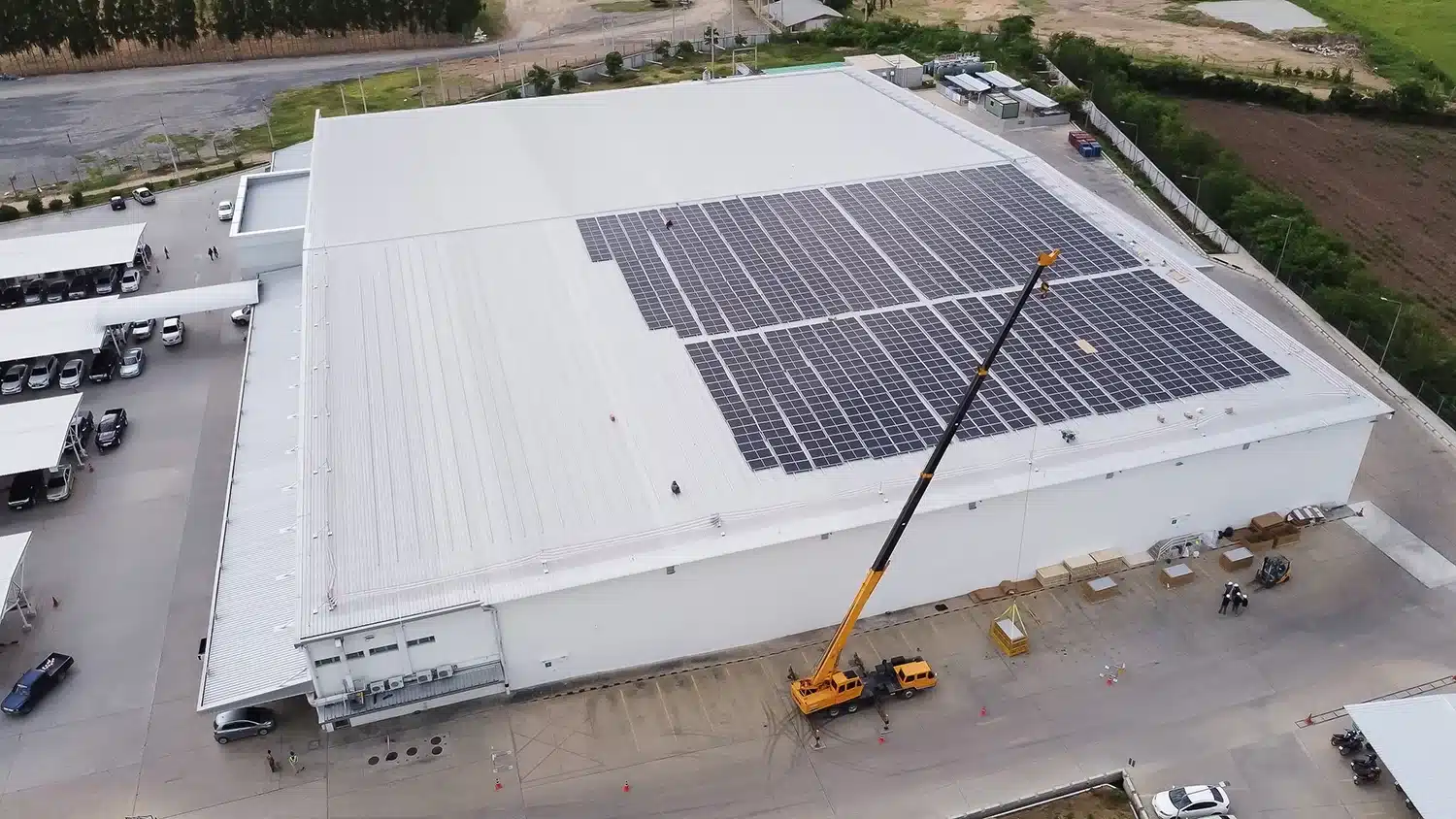
TL;DR:
- Roof assessment comes before system design. Roof type, structural load, sheet condition, and remaining service life all determine whether installation is viable.
- Panels carry a performance warranty of up to 25 years. Installing on a roof with insufficient remaining life means a costly mid-life removal to re-roof.
- Asbestos-cement roofing triggers two separate regulators: DOSH governs on-site removal, the DOE governs disposal. Both must be satisfied before any work begins.
- A thorough site assessment runs six sequential stages, from roof-type identification through to NEM eligibility review. Each stage must be completed before the next begins.
Before an industrial solar system installation can be designed or sized, the roof it sits on must be assessed. Roof type, structural load capacity, sheet condition, and remaining service life are the 4 variables that determine whether installation is viable and how it should be approached.
Malaysian factories and warehouses range from pre-2000s structures to modern high-bay logistics facilities. Each presents a different set of structural and mounting considerations. A single generic approach does not fit all. Attempting one is a reliable path to project delays and cost overruns.
This article outlines what an engineering-led site assessment covers, so you know what questions to ask and what information to have ready before engaging an EPCC contractor.
What to Check Before Putting Solar on an Industrial Roof
Your roof structure determines whether industrial solar panel installation is viable before a single panel is specified. Before engaging a contractor, establish what you are working with: age, loading records, and material condition.
In Malaysia, the combination of monsoon loading and high ambient temperatures creates conditions that can accelerate roof deterioration beyond what standard load calculations assume. Industrial vibration is an additional variable worth raising with your structural engineer at assessment stage.
Request a formal structural and roof-condition assessment as the first step. This protects your capital investment and is standard practice for any credible EPCC contractor. Arriving at this assessment with basic documentation (original building drawings, any prior repair records, and equipment load history) shortens the process and improves accuracy. Your contractor’s engineering team should confirm your roof classification at the site survey before any further work is scoped.
Roof Types on Malaysian Factories and Warehouses
Knowing your roof type narrows the installation method from the outset.
Inverted box rib (IBR) steel sheeting, trapezoidal metal deck, and reinforced concrete flat roofs are among the roof types frequently found on Malaysian industrial buildings. Each has different structural properties, drainage behaviour, and solar mounting implications.
Some older factory roofs used asbestos-cement sheeting. This material cannot be penetrated or loaded without satisfying 2 separate regulatory requirements. On-site physical removal and handling fall under the Department of Occupational Safety and Health (DOSH). Containment, transport, and disposal are regulated by the Department of Environment (DOE). Both DOSH and DOE requirements must be satisfied before any roofing or solar work can proceed. Factory roof compliance with both bodies is a prerequisite, not an afterthought.
Can My Roof Hold Solar Panels?
Structural capacity is only part of the picture. A structural engineer must verify what your building can carry against its original design specification before any industrial solar system installation is sized.
The dead load a solar PV system adds varies by panel model, mounting method, and racking configuration. A structural engineer assesses this against your building’s original design specification under the relevant Malaysian Standards, not against what the roof has carried before. Prior equipment loads are not a reliable benchmark.
Request engineering design documentation as part of the proposal stage. Northern Solar’s commercial and industrial solar service is delivered by a certified in-house team of engineers and chargemen, all holding Sustainable Energy Development Authority (SEDA), Grid-Connected Photovoltaic (GCPV) certification, with system design customised to each client’s site and energy-saving targets. Their credentials should be verifiable on request.
Your roof condition determines your project timeline and budget as much as the solar system itself. Before committing to a design, it is worth having an engineer review what you are working with. Book a free consultation with Northern Solar to get an honest assessment of your roof’s readiness before your contractor moves to design.
Sheet Condition and Remaining Roof Life
The starting point is an honest assessment of what the roof currently looks like. Installing solar on a roof with insufficient remaining service life is a common and costly mistake. Panels carry a performance warranty of up to 25 years. Removing a system mid-life to re-roof costs more than addressing the roof beforehand. Budget for the roof first.
Inspect for rust, corrosion at fastener points, sheet deformation, loose purlins, and waterproofing failures. In Malaysia’s humidity and acid-rain conditions, steel roofing can deteriorate faster than anticipated, particularly in industrial and coastal corridors.
If remedial work is required, factor it into your project cost and timeline from the outset. A phased approach, where roof repair precedes solar installation, protects the integrity of both the structure and the PV system, and is worth discussing with your contractor at the feasibility stage.
Mounting: Penetration, Ballast, and Clamped Systems
Common mounting approaches for factory roof solar each suit different roof types and loading conditions. Selecting the wrong method compromises either waterproofing or structural integrity.
| Mounting type | Method | Best suited to | Key risk if misapplied |
|---|---|---|---|
| Penetration | Bolted through the roof sheet | IBR and trapezoidal metal deck with strong structural capacity | Waterproofing failure at each penetration point if not sealed correctly |
| Ballast | Weighted system, no drilling | Flat concrete roofs with sufficient load tolerance and low wind uplift exposure | Structural overload if dead load capacity is insufficient |
| Clamped | Fixed to roof profile without drilling | IBR and trapezoidal metal deck where preserving waterproofing is a priority | Inadequate fixation if roof profile is non-standard or degraded |
Your EPCC contractor should document the mounting rationale in the design proposal. If it is not explained, verify it before signing off on the design. A system specified for your site should reflect your specific roof type, load tolerance, and operational requirements, not an off-the-shelf configuration.
What Warehouse Industrial Solar System Installation Requires Beyond the Basics
Warehouses and logistics facilities share the same assessment sequence as factories but introduce additional variables worth raising at the structural review stage.
Larger unobstructed roof spans are an advantage for generation output. However, forklift vibration, dock-leveller movement, and frequent roof access for equipment maintenance introduce loading variables that a standard factory assessment may not capture.
Rooftop solar is also a recognised contributor to reducing radiant heat transfer through the roof. The extent of this benefit varies by building design, insulation, and operational conditions, but in high-bay facilities with significant cooling costs, the impact on operating expenditure is worth modelling.
If your warehouse operates under a bonded or free-trade zone licence, confirm with your EPCC contractor whether MIDA or Customs requirements apply to your installation ahead of design sign-off. This is a step that some operators overlook until the commissioning stage.
The Site Assessment Sequence
All of these variables (roof type, structural capacity, operational conditions, and regulatory obligations) feed into a single structured process.
A thorough site assessment for industrial solar system installation in Malaysia typically covers 6 stages in sequence:
| Stage | What it covers | Why it gates the next step |
|---|---|---|
| 1. Roof-type identification | IBR, trapezoidal metal deck, flat concrete, or other material | Determines which mounting method is viable before any load analysis begins |
| 2. Structural load review | Dead load capacity against original design specification | A roof that cannot carry the system cannot proceed to design |
| 3. Sheet-condition inspection | Rust, corrosion, deformation, loose purlins, waterproofing failures | Remedial work must be scoped before system sizing |
| 4. Shading and orientation analysis | Panel placement, tilt angle, shadow-free area | Affects generation output estimates and array layout |
| 5. Grid connection capacity check (TNB) | Available connection capacity at the meter point | Determines maximum export capacity and inverter sizing |
| 6. NEM or SELCO eligibility review | Application category, quota availability, tariff classification | SEDA approval must precede TNB application |
Each stage gates the next. Malaysia solar projects that skip the structural review routinely face design changes and delayed TNB applications.
Get an Honest Assessment Before Moving to Design with Northern Solar
Don't risk expensive redesigns, structural issues, or premature re-roofing mid-way through your solar warranty. Book a free site consultation for industrial solar system installation with Northern Solar to verify your factory roof's structural load, sheet condition, and mounting feasibility before committing to a system design.
Factory and Warehouse Roof FAQs
How do I know if my factory roof can support solar panels?
A structural engineer must review your building’s original design specification and carry out an on-site load assessment before any solar system is sized. The assessment covers dead load capacity, existing equipment loads, and the condition of structural members such as purlins and roof trusses. This review is a standard component of any credible EPCC site assessment and should be completed before design work begins.
What roof types are suitable for industrial solar panel installation in Malaysia?
IBR steel sheeting, trapezoidal metal deck, and reinforced concrete flat roofs are among the most commonly encountered roof types on Malaysian industrial buildings, and each is workable with the correct mounting approach. Asbestos-cement roofing requires separate treatment: physical removal and handling fall under DOSH, while disposal is regulated by DOE. Both regulatory requirements must be satisfied before any solar or roofing work can commence.
Is rooftop solar for warehouses different from factory installations?
The core assessment sequence is the same, but warehouses introduce additional variables including forklift and dock-leveller vibration, frequent roof-access requirements for operational equipment, and, where applicable, compliance obligations under bonded or free-trade zone licences. These factors are worth raising explicitly with your structural engineer and EPCC contractor at the feasibility stage.
What does an Operation and Maintenance service cover for an industrial solar system?
Northern Solar’s Operation and Maintenance service covers 5 areas: cleaning of solar PV panel surfaces, wiring management and checking, performance records and reporting, monitoring inspection, and warranty claim administration where required.