

TL;DR:
- Roof leaks from solar installations come from contractor execution, not the panels. Here is where the risk actually sits and how to eliminate it.
- For metal deck factory roofs, the standard is a non-penetrative seam-clamp or ballasted system. No holes in the roof surface.
- The workmanship warranty must explicitly cover water ingress at all mounting points. If it does not, request this in writing before signing.
- Before appointing any contractor, get written answers to 5 questions: mounting system choice, structural engineer sign-off, sealant specification, warranty coverage at the roof interface, and fault-response process after handover.
Rooftop solar on factory buildings raises a practical concern before it raises a financial one: will the installation compromise the roof? The question is legitimate, and it deserves a direct answer. A correctly specified and properly installed solar system does not cause roof leaks. The risk belongs to one variable only: how the contractor specifies, installs, and documents the work. This page explains where that risk sits, what to verify before committing to an industrial solar panel installation, and what to put in writing before any bracket goes up.
Can Factory Rooftop Solar Panels Cause a Roof Leak?
The direct answer is no. When the mounting system is matched to the roof type and installation is carried out by qualified engineers, factory rooftop solar panels do not cause leaks. The risk arises when the wrong system is specified, or when installation steps are skipped.
The distinction worth understanding early is between the panels themselves and the mounting interface. Panels are weatherproof by design and sealed at manufacture. It is the decisions made at the roof surface (bracket type, penetration method, sealant selection) that determine whether water ever enters the building.
This is important because it places the risk entirely within the contractor’s control. Roof leak risk in a solar installation is not a product problem. It is an execution problem.
Where Leaks Actually Come From
Industry experience consistently points to 3 installation failures as the primary causes of solar-related roof leaks: unsealed penetrations, omitted flashings, and mismatched mounting systems.
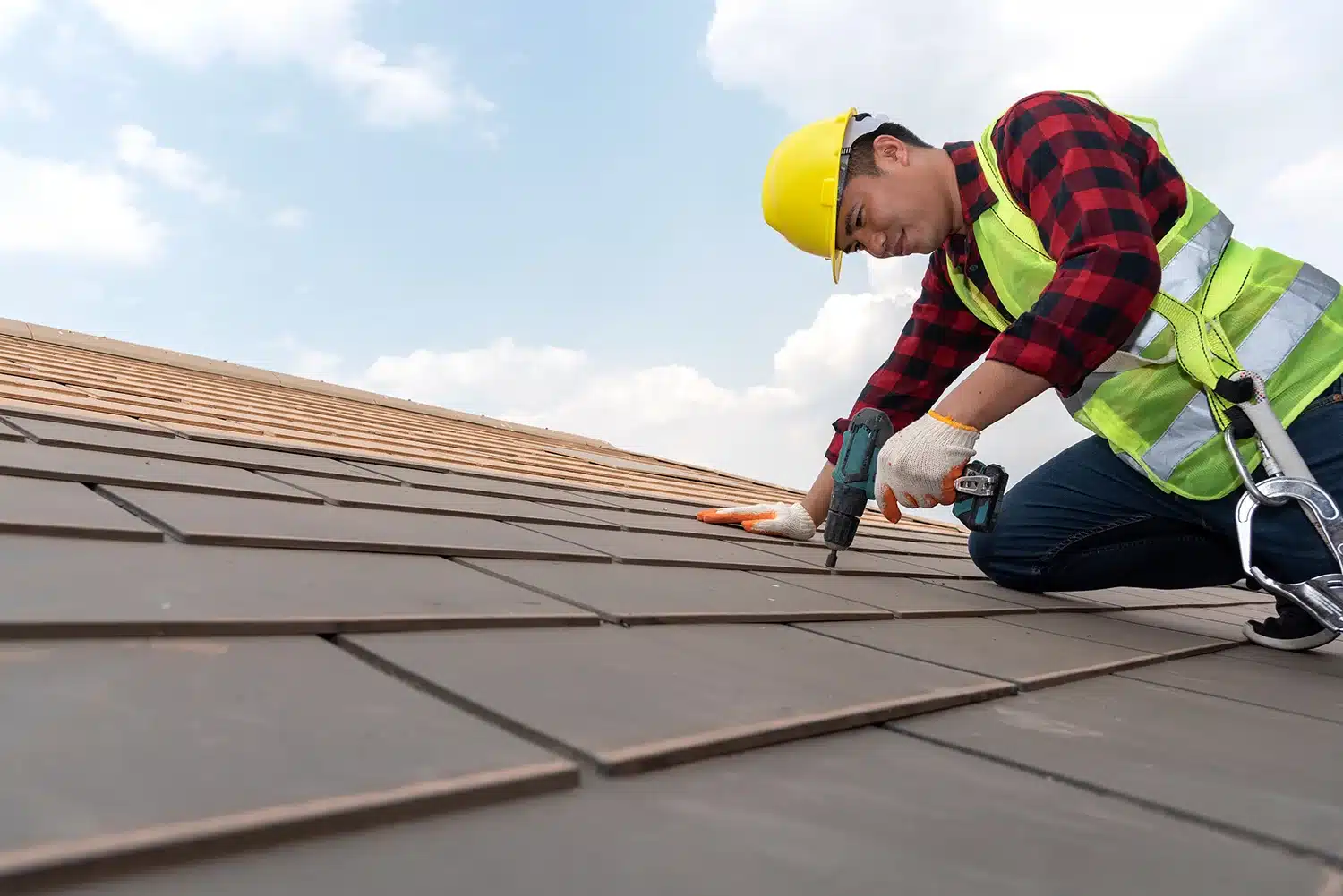
The first is penetrations that were not sealed to the correct specification. When a bracket anchor is drilled through the roof membrane without a purpose-built flashing collar and compatible sealant, water finds its way in. Not immediately, and often not until the first heavy monsoon event, but reliably.
The second is omitted flashings. Flashings are the formed metal or membrane components that redirect water away from any junction between the mounting system and the roof surface. Skipping or underspecifying them to reduce cost is one of the more common causes of post-installation water ingress on factory and warehouse roofs.
The third is thermal movement. Metal deck roofs, which are the predominant roof type across Malaysian factories and industrial buildings, expand and contract significantly across the daily temperature cycle. A mounting system that does not account for this movement will work loose over time, opening gaps that were not present at handover.
Each failure point is addressable and worth raising directly with any contractor before appointment. The mounting system is where that conversation should start.
Non-Penetrative Mounting on Metal Deck Roofs
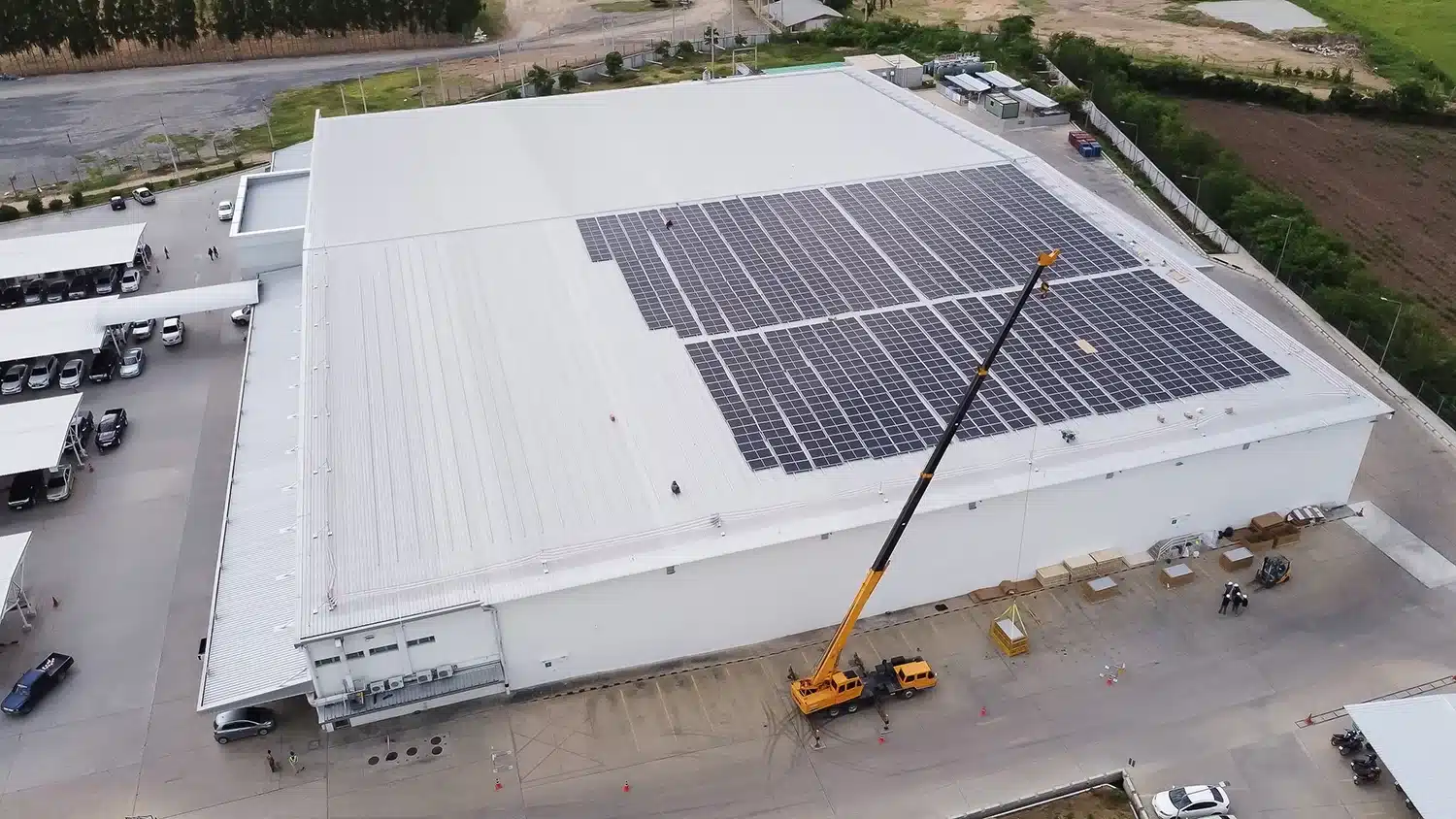
For metal deck roofs, which account for the majority of factory rooftop solar installations in Malaysia, the standard approach is a non-penetrative or seam-clamp mounting system that transfers structural load to the roof framing without breaking the roof surface.
The 2 systems commonly used:
| Mounting system | How it works | Roof type suited to | Penetrations required? |
|---|---|---|---|
| Seam-clamp | Clamps grip the standing seam mechanically; the mounting rail attaches to the clamp | Trapezoidal and corrugated metal deck roofs, common across Malaysian industrial buildings | No |
| Ballasted | Weighted bases hold the mounting structure in place using calculated ballast weight and wind load engineering | Flat or low-pitch commercial roofs | No |
The correct choice between these systems depends on the specific roof profile, pitch, factory roof load capacity, and site conditions. Determining this is part of the engineering design scope that a qualified EPCC contractor produces before installation begins, not after.
If a contractor cannot tell you which industrial solar mounting system they intend to use and why it suits your specific roof, they have not yet completed a site-specific design. Ask for this in writing before work proceeds.
How Penetrations Are Sealed When They Are Needed
Some roof configurations require structural anchor penetrations. When they do, the quality of the flashing collar, the sealant product, and the post-installation inspection determines whether the roof remains watertight across the system’s full operating life.
A correctly executed penetration involves 3 non-optional steps:
| Step | Requirement | What to watch for |
|---|---|---|
| 1. Flashing collar | Purpose-built collar compatible with the specific roof material | Not a generic repair-grade product chosen at the installation crew’s discretion |
| 2. Sealant | As best practice, a UV-rated sealant suited to Malaysia’s climate, accounting for heat, humidity, and prolonged UV exposure | Should be specified for a 25-year operating period, not a standard construction product |
| 3. Inspection protocol | A defined sign-off inspection confirming every penetration point has been sealed to specification | Assumptions are not sufficient. Each point must be verified before the roof is handed back |
When all 3 steps are completed to specification, the penetration is sound. The difference between a penetration that holds for 25 years and one that fails in the first monsoon season is the execution standard applied at the time of installation. This is why EPCC credentials, in-house certified engineers, and a written quality process matter for roof leak solar installation work specifically.
Who Carries the Risk: Warranty and Liability
A properly structured commercial and industrial solar installation separates 2 distinct warranties.
The first is the equipment warranty, which covers panels, inverters, and mounting hardware. This warranty is typically provided by the manufacturer, covering performance degradation and component failure.
The second is the workmanship warranty, which covers the installation itself, including the roof interface where all leak risk is concentrated. This is the contractor’s warranty, and its scope is the one that matters when a factory owner is evaluating roof protection.
The workmanship warranty should explicitly cover water ingress at all mounting points. If a contractor’s standard warranty document does not address this, ask for it in writing before signing. Ambiguity at this stage becomes a dispute after a rain event.
Before signing any installation contract, it is worth having the workmanship warranty reviewed against your specific roof type and site conditions. Speak to Northern Solar’s team to confirm what your warranty covers at the roof interface before work begins.
With the warranty structure clear, the next step is knowing how to evaluate the contractor in front of you.
What to Ask a Contractor About Roof Protection
There are 5 questions that separate a qualified industrial solar panel installation contractor from one who will create the problem you are trying to prevent:
- What mounting system do you recommend for this roof type, and why?
- Has a structural engineer signed off on the design?
- What is your waterproofing specification and sealant product?
- What does your workmanship warranty cover at the roof interface?
- What is your process if water ingress is reported after handover?
A contractor with in-house certified engineers, SEDA registration, and a defined quality system that meets Malaysia compliance standards will answer all 5 clearly and in writing. You can review Northern Solar’s completed commercial and industrial projects to see the range of factory and warehouse installations delivered under this standard, spanning systems from under 200 kWp to over 2,000 kWp across Malaysia.
When comparing proposals, use these questions as your evaluation framework. Price alone is not a reliable indicator of quality. A lower quote accompanied by incomplete answers to questions 4 and 5 is not a saving.
Protect Your Roof While Cutting Operational Costs with Northern Solar
Industrial solar panel installation should lower your facility’s operating expenses, not introduce structural headaches. Northern Solar delivers end-to-end EPCC solutions designed around roof preservation—combining certified in-house engineering, non-penetrative mounting systems, and clear workmanship warranties that explicitly safeguard your roof interface against water ingress.
Roof Leak FAQs
Do Solar Panels Void My Factory Roof Warranty?
Solar panels do not automatically void a factory roof warranty, but installation by an unregistered contractor may affect its standing. A factory’s original roof warranty often contains conditions around third-party works, and a penetrative installation carried out without the correct certifications and documentation puts that standing at risk. A SEDA-registered EPCC contractor identifies this risk during the site assessment and advises on the correct approach before any work begins. Raise the question of your existing roof warranty at the first consultation, not after installation.
What Happens If My Roof Leaks After a Solar Installation?
If the contractor has a written workmanship warranty that explicitly covers water ingress, and a defined fault-response process, the path is clear: the contractor attends, diagnoses the failure point, and carries out the remediation within the terms of the warranty. A clearly written scope of works, signed off before installation begins, removes ambiguity about where accountability sits. Where the scope is vague, disputes arise.
Can Solar Panels Be Installed on an Ageing Factory Roof?
Yes, but a structural and condition assessment, covering factory roof load capacity and surface integrity, should precede any installation on an older roof. Depending on the findings, a qualified contractor may recommend roof remediation before the solar system is installed. This is not an obstacle. It is a safeguard, and it is part of the site evaluation that a professional EPCC contractor conducts as a standard step.
Who Services the System After Installation?
A qualified solar contractor provides a structured operation and maintenance (O&M) programme covering panel cleaning, wiring inspection, performance reporting, monitoring review, and warranty claim administration. Before appointing any contractor, confirm whether they offer this as a defined programme with clear service intervals and a named fault-response process, or whether post-installation support is handled case by case. For factory owners running continuous operations, unplanned system downtime carries real cost.