

TL;DR:
- A rooftop solar panel installation introduces penetration points and altered drainage paths that require active engineering decisions, not standard sealant, to stay watertight through Malaysia's monsoon seasons.
- Large-span industrial metal roofs expand and contract under heat, making mounting system selection and thermal movement planning critical to preventing leaks.
- Non-penetrating mounting systems, such as klip-lok clamp attachments, eliminate the primary source of water ingress on metal factory roofs.
- Layered sealing using EPDM rubber gaskets and polyurethane-based sealants outperforms standard silicone under sustained UV exposure and thermal cycling.
- In Malaysia, SEDA-certified GCPV Qualified Persons and Registered PV Service Providers (RPVSPs) are assessed against the technical standards that govern structural and waterproofing integrity on commercial and industrial installations.
A rooftop solar panel installation on a factory is a long-term capital asset placed on top of another long-term capital asset. That distinction matters, because the roof beneath the array will face Malaysia's monsoon seasons long after the installation crew has left the site.
For factory owners evaluating a commercial solar system, the return-on-investment case is well-established. What is less straightforward is whether the industrial metal roof carrying that system will remain watertight over its lifespan. The answer depends on the engineering decisions made at design stage: which mounting system is specified, how penetration points are sealed, how drainage is modelled across the array, and who signs off on the work.
Why Factory Roofs Carry a Higher Leak Risk Than Residential Ones
Factory roofs are typically large-span, low-slope, and constructed from profiled metal decking. They behave differently from residential tile or concrete roofs under load and thermal movement, and the consequences of poor installation practice are proportionally larger.
A C&I installation covering hundreds of square metres means more mounting points, more penetrations into the roof membrane, and more fixing locations that must hold under sustained load and repeated rainfall. Malaysia's monsoon seasons deliver high-velocity, sustained rainfall that exploits any unsealed penetration quickly. A fixing that holds under dry conditions will not necessarily hold when water is pooling or driven laterally by wind.
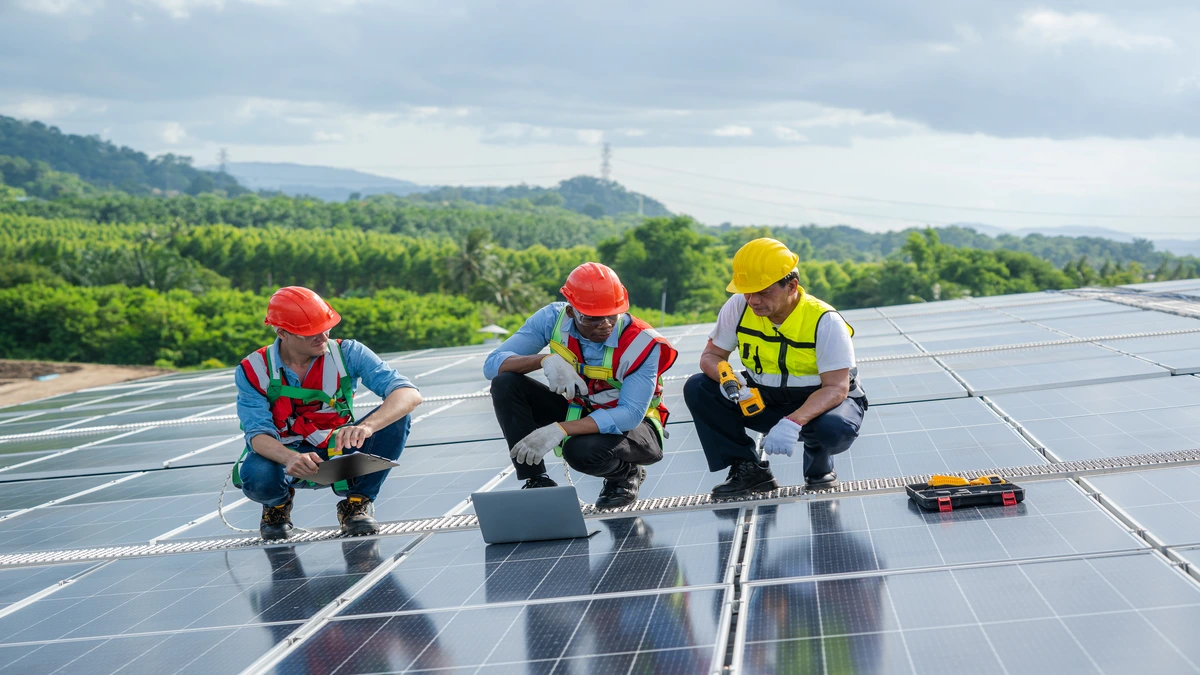
Before installation begins, a qualified engineer should assess the existing roof membrane condition, the structural load-bearing capacity, and the drainage gradient across the roof surface. That assessment drives the mounting system selection and the sealing specification.
What Mounting Systems Keep a Factory Roof Watertight Under Heavy Rain
The mounting system is the primary determinant of whether a rooftop solar panel installation introduces leak risk. On metal factory roofs, 2 broad approaches apply:
Non-penetrating mounting uses clamp mechanisms that grip the standing seam or klip-lok profile without drilling through the roof sheet, removing the primary source of water ingress entirely. Where roof profiles are compatible, this is the preferred approach for industrial installations in Malaysia.
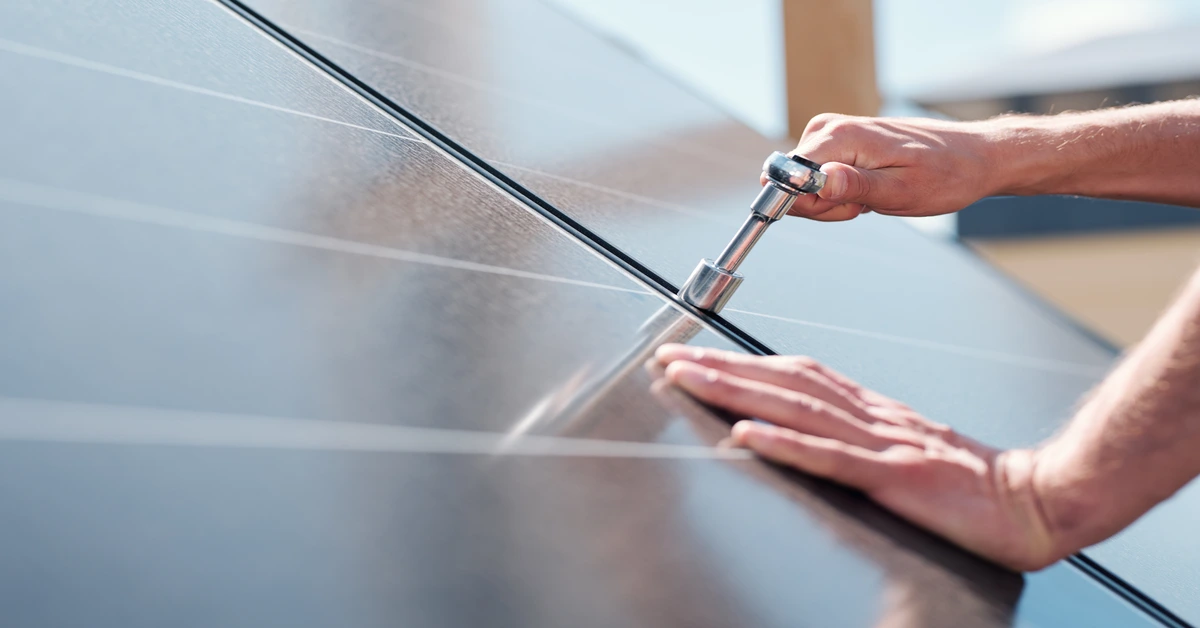
Penetrating mounting, used where the roof profile requires it, introduces fixing points that must be sealed to a high standard. At each location, 3 things are required:
- A UV-resistant, compression-rated gasket specified for tropical conditions
- A correctly torqued fixing that achieves the gasket's rated compression
- A metal flashing cap that sheds water away from the fixing point.
Both approaches must also account for thermal movement. Metal roofs in Malaysia expand and contract significantly across daily temperature cycles. A mounting system that does not allow for this will stress the roof membrane at fixing points over time, opening leak pathways that only become visible under sustained rain.
Before approving the design, request these from your installer:
| Item | Why it matters |
| Mounting system brand and model | Confirms compatibility with your roof profile |
| Gasket performance rating | Confirms tropical-grade specification, not standard |
| Thermal movement allowance | Confirms the design accounts for metal expansion |
| Roof membrane compatibility assessment | Confirms the mounting load suits your existing structure |
Which Sealing Techniques Hold Up Through Malaysia's Monsoon Seasons
Effective sealing at penetration points relies on layered protection, not a single sealant bead. The 3 elements work in sequence: a primary EPDM rubber compression gasket creates the watertight seal at the fixing point; a polyurethane-based secondary sealant covers any micro-gaps that remain after compression; and a metal flashing cap sheds water flow away from the assembly below.
Material selection matters more in Malaysia's climate than in temperate markets. EPDM rubber and polyurethane-based sealants maintain their performance under prolonged UV exposure and repeated thermal cycling. Standard silicone degrades under these conditions within a few seasons.
A practical checkpoint at this stage: ask your installer for a written sealing specification before works commence. It should identify the gasket material, sealant product, and flashing design for each fixing type. If they cannot produce this document, treat it as a risk signal worth acting on before signing any contract.
How Does Drainage Design Affect Roof Integrity After Solar Panel Installation?
Solar arrays on low-slope factory roofs can alter the natural drainage path across the surface. Panel rows create channels between the array and the roof membrane. If drainage design is not addressed in the installation plan, water accumulates in those channels rather than running to the roof edge or downpipe.
Standing water degrades a roof membrane faster than draining water. It concentrates at joints, fixing points, and membrane laps — the same locations where installation has already introduced potential ingress pathways.
A competent EPCC provider will model drainage flow as part of the installation design, confirming that panel orientation, racking height, and row spacing preserve adequate runoff gradient across the full roof area. The drainage plan should be part of your installation proposal, not added after the fact.
What Does SEDA Certification Require of Solar Installers?
In Malaysia, the Sustainable Energy Development Authority (SEDA) sets the qualification framework for solar PV work in Malaysia. That framework is built around Grid-Connected Photovoltaic (GCPV) certification. Individuals who hold GCPV Qualified Person (QP) status have been assessed on system design, load calculation, and the technical decisions that affect structural and waterproofing integrity. At company level, Registered PV Service Providers (RPVSPs) are listed on SEDA's directory and held to defined service standards.
Certification provides a verifiable baseline, not a guarantee of quality on every project, but it confirms that engineers on site have been assessed against a defined standard.
A rigorous post-installation inspection for a factory roof should produce:
- A water ingress test result at all penetration points
- A torque verification record for every mounting fixing
- A drainage confirmation check across the full array footprint
- Written documentation of the sealing specification, retained for the asset maintenance record.
Before signing, verify the following:
| Credential | How to verify |
| GCPV Qualified Person status | Confirm the individual's QP certificate is current |
| RPVSP company registration | Search SEDA's published RPVSP directory |
| Site crew qualifications | Confirm crew-level certification, not company-level only |
| Post-installation inspection report | Name this as a contractual deliverable |
Plan Your Rooftop Solar Panel Installation with Northern Solar
For factory owners, the financial logic of going solar is sound. It holds only if the roof beneath the system remains structurally intact and watertight across the asset's lifespan. The engineering decisions made at installation stage determine whether the system performs as an asset or becomes a liability at the first monsoon.
Northern Solar is a SEDA-registered EPCC provider with a track record across commercial and industrial properties in Malaysia. Every rooftop solar panel installation is engineered to specification, from mounting system selection and drainage planning through to post-installation waterproofing verification.
Contact our team to arrange a site assessment and discuss how your factory roof can be protected through certified installation methods built for Malaysia's climate.