

TL;DR:
- Regular solar panel cleaning prevents output losses caused by dust, debris, and pollution buildup
- Malaysia’s humid, coastal, and urban climates accelerate panel soiling, necessitating routine maintenance
- Use data monitoring and physical, visual inspections to detect efficiency loss early
- Professional cleaning ensures safety, warranty compliance, and long-term performance.
Malaysian Climate Factors Causing Solar Panel Efficiency Loss
Solar panels in Malaysia are exposed to a mix of weather extremes, from humid coastal air to dense urban haze, which quickly adds to surface soiling and degradation.
Understanding how these environmental factors affect your solar output can help you plan a more optimal cleaning schedule for solar panels while preventing unnecessary long-term damage.
How Urban Pollution and Industrial Emissions Reduce Solar Output
In cities and industrial zones, airborne pollutants such as soot, carbon particles, and fine dust frequently settle on solar panel surfaces. Over time, this layer blocks sunlight absorption and prevents your solar panel system from working efficiently.
Studies show that panels exposed to high pollution levels can experience up to a 20% reduction in power generation if not cleaned regularly. For commercial properties near busy highways or manufacturing plants, quarterly cleaning cycles are often necessary to maintain consistent output.
Impact of Coastal Salt Deposits and Humidity on PV Performance
Properties along the coastline face additional challenges from salt-laden air. Salt particles form microcrystalline deposits corrode metal frames and create a hazy film on solar glass, reducing light transmission.
High humidity accelerates this process, particularly when combined with industrial pollutants. Regular rinsing with deionised water helps prevent salt buildup and maintains long-term performance.
Weather-Related Soiling: Monsoon Debris, Pollen & Agricultural Dust
During monsoon seasons, panels can collect organic material such as pollen, fallen leaves, and even fine silt carried by strong winds. In agricultural areas, airborne soil particles and crop residue contribute further to dirt accumulation.
The result is irregular shading across panel surfaces, leading to localised hot spots that shorten system lifespan. Timely cleaning after monsoon periods or heavy wind events is therefore essential for optimal power generation.
Identifying Solar Panel Performance Degradation in Commercial Systems
While solar panels are built to endure harsh conditions, their efficiency naturally declines over time when cleanliness is overlooked. Recognising the early signs of performance monitoring for dirty solar panels helps you schedule maintenance before small issues become costly inefficiencies.
Monitoring Energy Production Decline: Early Warning Systems & Alerts
Most modern PV (photovoltaic) systems are equipped with monitoring platforms that track energy output in real time. A noticeable drop in daily or monthly generation compared to past averages often signals surface soiling. By setting up automated alerts, you can detect performance dips early and plan targeted cleaning to restore efficiency.
Data Analytics vs Physical Inspection: Best Practices for Maintenance Decisions
While digital monitoring provides valuable insights, combining data analysis with on-site visual inspections gives a complete picture of system health. Drone-based imaging and infrared scanning can reveal shading patterns or dirt accumulation invisible to the naked eye. For large-scale commercial installations, integrating data trends with regular manual inspections ensures maintenance resources are allocated efficiently.
Professional Solar Panel Cleaning Techniques for Maximum Energy Yield
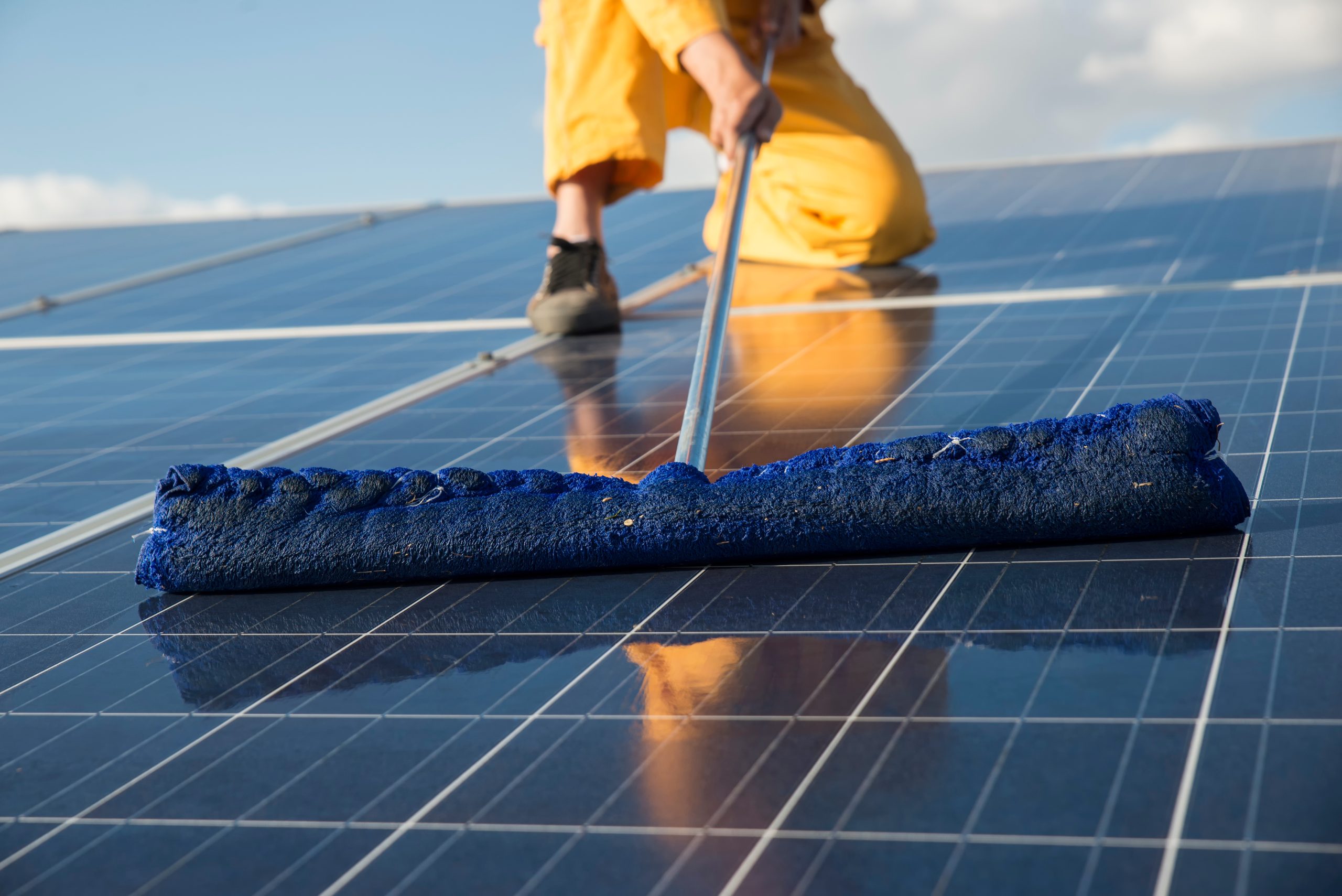
Cleaning solar panels may seem straightforward, but improper methods can void warranties or damage surface coatings. Professional-grade cleaning services ensure panels are maintained safely and in accordance with manufacturer guidelines.
Recommended Cleaning Equipment: Non-Abrasive Tools and Deionised Water
The best cleaning practices involve soft brushes or cloths, telescopic poles (for hard-to-reach areas), and distilled or deionised water to avoid mineral deposits. Abrasive tools or detergents should be avoided, as they can scratch the glass surface or interfere with anti-reflective coatings.
Warranty-Compliant Cleaning Methods for Commercial Solar Installations
Professional teams follow strict protocols to ensure that all cleaning procedures comply with warranty and safety standards. These include using non-conductive tools near electrical components, applying minimal water pressure, and logging each maintenance session for documentation purposes.
For commercial and industrial systems, compliance documentation not only protects warranty coverage but also supports insurance claims and asset management reporting.
Now that you know how maintenance protects solar performance, take the next step—request a free solar consultation and discover how expert care can unlock greater efficiency and long-term savings.
Advanced Solutions to Reduce Solar Panel Cleaning Frequency
Although regular cleaning remains essential, modern technologies are helping reduce how often it’s required. These innovations improve surface durability and maintain consistent performance even under harsh conditions.
Anti-Soiling Technologies and Protective Surface Treatments Explained
Hydrophobic coatings and anti-soiling films create a microscopic barrier that prevents dust, pollen, and water droplets from adhering to panel surfaces. These treatments work particularly well in high-humidity environments, minimising manual cleaning cycles without sacrificing performance. Over time, this reduces operational costs and improves system uptime.
Optimal Solar Panel Installation Angles for Self-Cleaning
The angle at which panels are installed also influences how easily dirt and water slide off naturally. Panels mounted at an angle of at least 10°–45° allow rainwater to wash away light debris, acting as a passive cleaning mechanism.
When properly configured, this can significantly extend the intervals between professional cleanings, especially in regions with consistent rainfall patterns.
Boost Your Business Energy Production with Northern Solar's Maintenance Services
Regular solar panel cleaning is one of the simplest yet most effective ways to sustain high energy yields and maximise system longevity. As a leading EPCC provider, Northern Solar offers end-to-end solar operation & maintenance solutions, from performance monitoring to professional surface cleaning.
Our engineering teams use industry-approved techniques guided by data-driven insights to help clients achieve lasting efficiency and energy reliability. Keep your solar panels operating at full potential with us—contact us today for a comprehensive cleaning and performance assessment designed to protect your long-term energy returns.